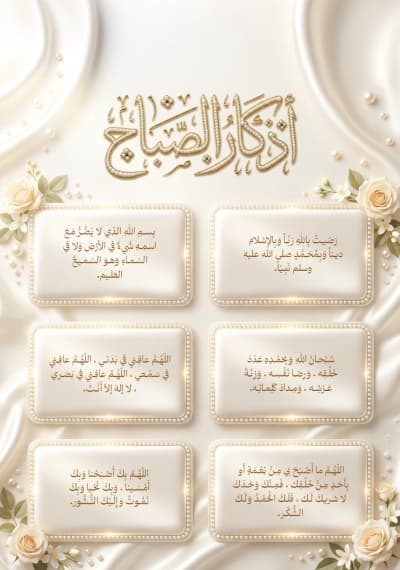
Morning Adhkar Cards to Share Daily

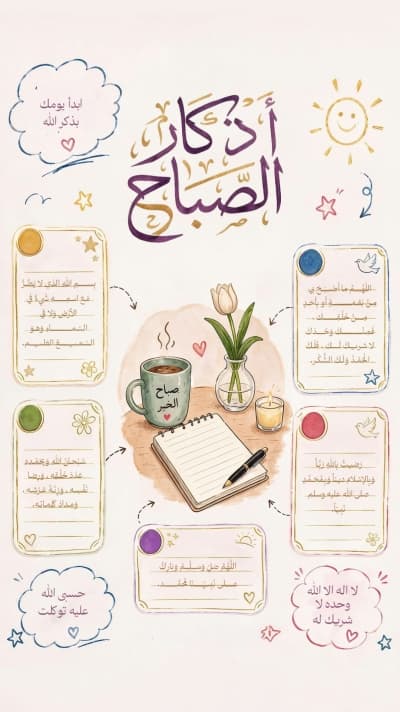
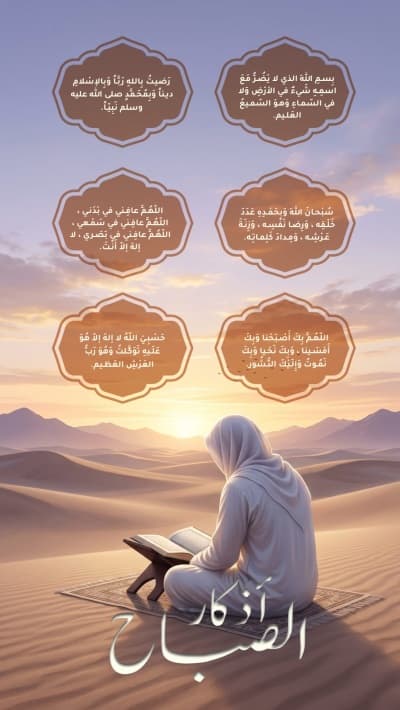
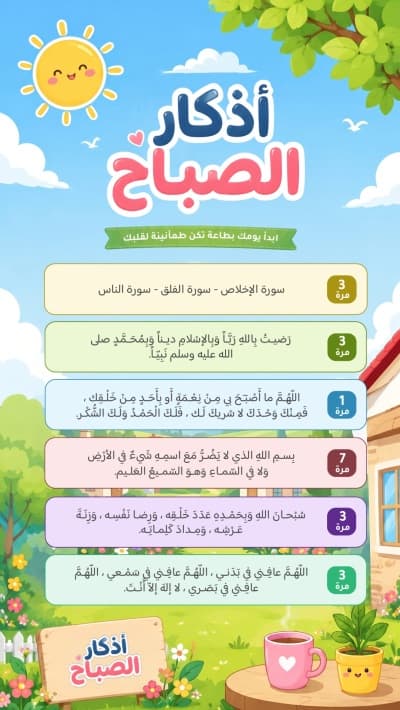
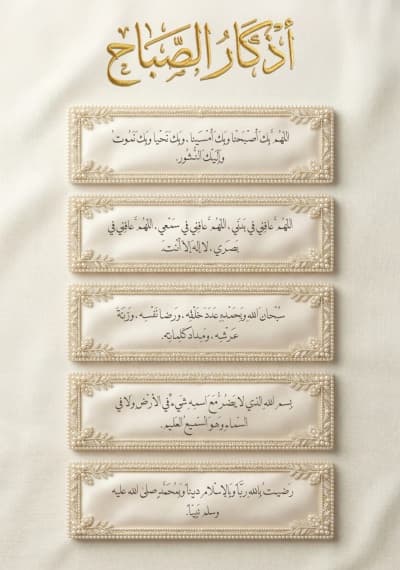
Post the morning adhkar every day. The text is already in the template in Arabic with tashkeel, on light backgrounds sized for stories and feeds.

Start designing
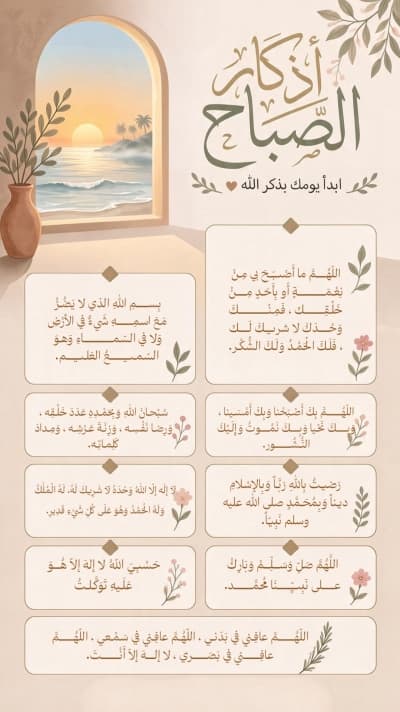
Morning Adhkar Cards

Why a template built for the morning?
Because the morning adhkar go out at the same hour every day. What you need is not one design but a shape that repeats, so these use light, bright backgrounds and hold the vocalised Arabic text already in place.

What can you design?

  • Morning adhkar cards from Hisn al Muslim

  • Start-of-day duas and the ma'thurat

  • A daily series with fixed colours and fonts

  • Posts and stories at ready sizes

  • Cards carrying your da'wah account's logo

Are they made for daily posting?
That is the main purpose. Change the remembrance and leave everything else, and today's post is out in under a minute while the account stays visually consistent across days.

الأسئلة الشائعة

What are the traditional morning adhkar?
They open with Ayat al-Kursi, then Surat al-Ikhlas and the two Muawwidhat three times, then the words acknowledging that morning and dominion belong to God alone, and the supplication that we live and die by Him. Andalusi turns them into a post in a script that reads clearly on a phone.
When are the morning adhkar said?
From after the dawn prayer until sunrise, and anyone who misses that may say them up to midday without blame. The evening set runs from after the afternoon prayer to sunset, extending into the night by some scholarly views. Andalusi lets you build a daily post reminding followers of both.
What is the benefit of keeping to the adhkar?
The tradition holds that keeping to the morning and evening remembrances brings protection and settles the heart, and that reciting Ayat al-Kursi in the morning guards a person until evening. The benefit comes from consistency rather than volume on one occasion. Andalusi lets you design a card to display or share daily so the habit holds.
How do I design a clear adhkar post?
Put no more than three remembrances in one post so it can be read in full on a phone, give each its own line with space between, use a Naskh script on a calm single colour background, and note the repetition count beside each. Andalusi's layouts are built on that division.